venerdì 7 agosto 2015

Chapters 13 and 14 of the thriller "D.C Undercover" Oscar Bartoli (Scarith Books/New Academia Publishing)


Chapter 13

Venerable Master Gaetano Olderisi of the Garibaldi Lodge rapped his gavel to call for the attention of the Brothers crowded into the small temple of the Scottish Rite Center. “Brothers, help me in opening the Lodge,” he said as he began reciting the Emulation ritual in Italian. The ritual consisted of a memorized exchange of dialogue with the Senior and Junior Wardens and with the Inner Guard and Tyler.

Once the Lodge was opened at the Entered Apprentice level, Worshipful Master Olderisi asked the secretary, who was seated to his left, if there was anything he wanted to share. Secretary Oreste Balducci stood up, made the sign of penalty and said, “Worshipful Master, we have two candidate applications accompanied by their inquiry commission reports. Of greater importance, however, is the need for the Lodge to examine and discuss the issue of a lack of insufficient Brotherhood participation in our labors.”

The Worshipful Master signed and replied, “Dearest Brothers. This is a very delicate matter. The moment has come to take a decision in the best interests of our Body now that we have been in existence for over ten years. The main concern of the Grand Masters who have governed our Grand Lodge has been, and still is, to stop spurious infiltrations into the bilingual lodges established over the past twenty years in Washington DC. Together with the Council of Lights, which includes the Senior and Junior Wardens and the secretary, we have decided to undertake a close screening of our membership. We have a number of Brothers, many residing in Italy, who after rising through the degrees of Entered Apprentice, Fellow Craft and Master Mason have completely disappeared from sight. Let’s speak frankly, dear Brothers. Many of these members have shown by their behavior that their sole interest in Freemasonry was the desire to be able to claim membership in our Lodge. They do not reply to our solicitations, they do not confirm their addresses, and they do not participate in the work of other Lodges. I open the discussion on the matter.”

The Brothers took turns in raising their hands. At first they spoke hesitantly, but then they participated vigorously in the discussion. Worshipful Master Olderisi cautioned the speakers to be tolerant of each other’s opinions, listened carefully and acted as moderator. The meeting then passed on to consideration of various administrative matters presented by the secretary after which the Worshipful Master brought it to a close with a ritual tap of his gavel and sent everyone home. He alone would make any final decision. After all, while it is good and fine to listen to other opinions, the last word belonged to the head of the Lodge as the ultimate authority.

The Venerable Master had to admit that many of the comments presented made a lot of sense. They were the same issues impacting other organizations, such as the Rotary – despite the fact that they were not in any way affiliated.

“Basically,” Olderisi concluded, “if we do not offer some kind of benefit the end result will be a constant loss of members. We lack appeal and are paying for it. In Lodges throughout the world talking about politics and religion is forbidden. But life is based on politics and religious conflict. Everything is political, from atmospheric pollution to global warming, water and energy scarcity, cultural clashes, worldwide economic crises, drugs, and education. Everything is political. And we expect to keep the profane world at bay to safeguard the tranquility and survival of our Lodges. It’s a worthy principle, but we cannot ignore what is happening around us. George Washington and the Founding Fathers were Freemasons and they knew where they wanted to go. They were visionaries and their vision of the future might have seemed an impossible dream. They were fighting against the most powerful empire in the world. And yet they succeeded. And the men who led and those who fought for the Risorgimento in Italy were Brothers but they were also political. Their goal was to unify Italy and liberate it from foreign oppression. Many died, but in the end they too succeeded. So, we must not partake in partisan politics at the Lodge. But we can deal with everyday political issues. We must do this to capture the interest of the youth and give an incentive to act appropriately in the profane world. We must do more to attract Brothers, especially the talented ones, who do not come to our meetings because they consider them a waste of time.”
_________________________________________________________________________________

OLLYN-LA-QUEBRADA-ACAPULCO
Chapter 14

The Falcon landed at the General Juan N. Alvarez International Airport and taxied towards the private aviation section. A black SUV was waiting on the tarmac. It was a VIP special edition car: armored, bulletproof windows, extra strength tire, custom breaks and super turbo engine. Once completely outfitted it cost as much as a Ferrari. The American company that retrofitted the SUV also provided special driving courses for chauffeurs. Among other things, the drivers learned how to get through roadblocks and ambushes by folks armed with machine guns – not an easy feat when at the wheel of a very heavy car. Who bought these cars? Politicians, CEOs and drug traffickers. Often all rolled into one.

The Hon. Edmundo Gutierrez quickly descended the plane ramp and got into his SUV, all the while holding a black leather briefcase close to his chest.

“Sweetheart, how are you?” he whispered into his cell phone.

“Oh, Edmundo you are back. I feel much better. It was a case of, you know, female trouble. I am happy you are here.”

“Do you feel up to dinner? I don’t want to impose on you if you are still under the weather, honey.”

Olivia reassured him all was fine. Once he had showered and relaxed they would meet in the private Quetzalcoal room at 9 p.m. Olivia was wearing a Balenciaga long gown that showcased her voluptuous figure. Its low cut barely covered the nipples of her full cleavage. The gown’s bare back extended below her waistline.

She approached Gutierrez who was seated at his reserved table in the famous restaurant. She kissed him on the cheek and sat down in front of him. He gazed at her in ecstasy.

“I ordered shrimp cocktail for you too. I hope that’s all right. Then we will have fresh bass.”

Olivia replied with a smile that emphasized her dimples.

“If you don’t mind my asking, how did your trip to Mexico City go?” she asked while sipping on a flute of vintage Veuve Cliquot Brut champagne.

Edmundo Gutierrez raised his champagne glass to Olivia’s.

“We have no secrets, my love. I think my private meeting with the President went very well. He needs someone like me by his side after all the negative experience he’s had with other party members. The President needs a small circle of trusted allies. He said this with great sincerity. We also discussed what has to be done during the remaining years of his mandate because, as you well know, presidents cannot be re-elected in Mexico – unlike in other countries such as the U.S.”

They sipped their champagne and started in on the shrimp cocktail.

“I am happy to hear this. The President has finally realized how important it is to have someone with your experience at his side.”

Edmundo Gutierrez gazed upon Olivia’s face, with her green eyes that seemed to change color depending on her mood.

“God, you are so lovely!” he said. “Tell me about your day. What did you do?”

“Nothing special. I spent a few hours at the pool. Then I took a long walk along the beach. The waves were strong – you had to be careful not to get swept into the water. Then I came back, took a shower, and started reading.”

“What were you reading, sweetheart?”

“Don’t laugh. I’m reading the Koran. I want to try and understand why almost two billion people are Muslims even though the Prophet Mohammed preached five centuries after Christ.”

“I’m pleased you are trying to learn more about this religion that seems so antithetical to Christianity. You can be my adviser on matters of faith. Listen, Olivia. How about stopping at Quebrada after dinner to see that last diving show? Feel like it?”

Olivia replied that it had been years since she had seen the divers.


The attentive waiter served the bass with a side of string beans and roast potatoes.


The SUV zoomed across Acapulco thanks in part to the yellow flashing light the driver had placed on the dash. The American tourists who dared set foot on the pedestrian crossings had to leap backwards to avoid being mowed down. In Mexico no one respected traffic rules. It was a case of survival of the fittest and the black armored SUV and its cross-country escort vehicle were prime examples.

Gutierrez’s three bodyguards pushed their way through the hundreds of spectators on the terrace. They were all there to watch the high cliff divers.

Olivia and her elderly lover moved to a spot reserved for them. The tourists were held at bay. The Spanish word Quebrada means ravine. In Acapulco it is a cleft in the coastline. La Quebrada cliff divers calculate the exact moment to catch an incoming wave and launch themselves from heights of up to of 125 feet into the sea in exchange for the proceeds from the sale of tickets and tips.

Before diving they make the Sign of the Cross. The youngest divers had already taken their turn under the bright lights. Their tan bodies in skimpy bathing suits were a cause for much admiration on the part of the female audience.

The last dive was from 125 feet and that evening the chosen one was the famous Balboa. The spotlights focused on this small, compact body. Every evening, together with his colleagues, he risked his life for a few dollars. Since its founding in 1934 to stop the exploitation of young divers, there had been several dozen fatalities among the Quebrada Cliff divers.

Balboa adjusted his red bathing suit as he positioned himself on the rocky cliff. He waved at the spectators to elicit the thunderous applause that erupted. After making the Sign of the Cross, he paused for a few seconds and then took an angel dive off the cliff.

The tourists’ video cameras followed him all the way down into the water. Balboa then re-emerged to another round of applause from the tourists as they began leaving. He climbed up the rocks to where the spot where Olivia and Edmundo had been watching. Olivia clapped her hands and exclaimed, “Bravo!”  “Thank you, señorita” he replied.

“Let’s go see where they dive,” said Edmundo and they walked towards the steps that led to the diving platform.

The tourists and divers by now had all left La Quebrada. The next day the divers would be back and would have to deal with rough seas, but the Madonna of Guadalupe would protect them.

Edmundo Gutierrez took Olivia by the hand and led her to the edge of the cliff from where Balboa had taken his dive.

“Edmundo, please. You know I am afraid of heights. Let’s go back.”

They turned, sat on some plastic chairs and gazed at the lovely moonlight and its reflection on the water.

“What a fantastic night!” said Edmundo.

A bottle of Moët Chandon in an ice bucket had been placed on a nearby table.

“Let’s drink to our love.”

He poured champagne into two flutes and handed one to Olivia who was watching the waves enter and retreat from the ravine. Then he poured a second glass. Olivia politely tried to beg off.

“Edmundo, do you want to make me tipsy? You know I can’t handle alcohol.”

“Listen, Olivia. This is a special evening for us. No ifs or buts. Please do as I ask, my love.”

Then Edmundo took a silver case from an inside jacket pocket and placed it on the table. He opened it, tapped out two lines of cocaine and using his own personal silver straw snorted one up.

“Now it’s your turn, Olivia,” he said handing her the silver straw.

“Edmundo, you know I detoxed at that clinic in New Mexico. I can’t. Believe me.”

“Tonight you must. I am ordering you.” Gutierrez’s voice had taken on a sudden threatening tone. His fierce expression convinced Olivia to take the straw and snort up the line of cocaine. Then she relaxed back in her chair and drank a third glass of champagne Edmundo had poured for her. During the next few minutes of silence the alcohol and drug took effect. The only sound was that of the rising waves on the rocks. Gutierrez signaled to his assistant who brought over a DVD player.

“Olivia, put on these headphones. I want to show you something interesting.”

The young woman looked at him in surprise, while rubbing her nose. On the small screen were images of Olivia and Michael engaged in passionate sex.

The next morning the El Sol de Acapulco newspaper front page had a story on the decapitation of seven drug dealers committed by a rival gang.

An inside page had a piece on a young American tourist who had fallen into La Quebrada after the diving show had ended. The police account, based on the medical examiner’s report, was that she must have lost her balance due to over consumption of alcohol and drugs.
________________________________________________________________________________


Copyright © 2012 by Oscar Bartoli
New Academia Publishing/SCARITH Books, 2013
Translated from W.D.C. Sotto traccia, © 2012, Betti Editrice Translator, Maria Enrico
All rights reserved.
Printed in the United States of America
Library of Congress Control Number: 2013930329 ISBN 978-0-9860216-8-8 paperback (alk. paper)
All characters appearing in this work are fictitious. Any resemblance to real persons, living or dead, is purely coincidental.
An imprint of New Academia Publishing P.O. Box 27420, Washington, DC 20038-7420
info@newacademia.com www.newacademia.com

domenica 26 luglio 2015

Chapters 10, 11 and 12 of the thriller "D.C Undercover" Oscar Bartoli (Scarith Books/New Academia Publishing)


Chapter 10

“The world is like a caviar canapé,” said Edmundo Gutierrez while he heaped Iranian Beluga on a tiny cracker. “You see these precious sturgeon eggs? Too many for the cracker, just as there are too many people on the planet.” The caviar and the cracker disappeared in his mouth. “Natural resources sooner or later will run out. Sooner, rather than later. Population increases in China, India and Brazil translate into millions of new consumers. We are now more than 7 billion. In the past wars, mainly world wars, brought down the numbers. As did epidemics and plagues.”

He gulped down the shot of vodka that had been placed next to the bowl of fresh, unpasteurized caviar.

“What is your opinion, Michael?”

“What you say is quite true. I also think we need to explore ways to develop new approaches and new energy sources.”

“Oh, so you are on the side of the ecologists… We picked the wrong man for the right project.”

Gutierrez laughed, but in a forced way. Michael sipped his champagne.

“Jokes aside, my way of thinking is shared by many at the highest levels of the oil industry. You know, as well as I do, that Exxon, Shell, BP and others have made heavy investments in finding new energy sources, in developing techniques for the extraction of oil and natural gas and converting water into hydrogen. Who would have imagined twenty years ago that more than 10 percent of each gallon of gas we put in our tanks would be made from bio fuels or grain derived ethanol? It is absurd to believe, as any many ecologists do, that fossil fuels can be completely replaced. But developing complementary solutions on the other hand could be highly profitable.”

Edmundo Gutierrez studied the handsome blond man in front of him who spoke in perfect English, while occasionally inserting a few sentences in acceptable Spanish thanks to his knowledge of Italian.

“Listen, Mr. Bardi. You fly back to the US tomorrow. I am leaving now for Mexico City on my private Falcon. I have a morning appointment with the President. So, take the envelope and the check. I hope to receive a positive answer from you, accompanied by a report on what is going on with our lobbyists.”

Gutierrez shook Michael’s hand and with a grimace stood up with the help of his “niece”  She had not said a word throughout, but had limited herself to looking away whenever Michael happened to glance at her. Michael sat down and called over the headwaiter who rushed to the table.

“I’d like to listen a few Mariachi songs, if at all possible.”

“They are finished for the night, but anything is possible, Mr. Bardi,” he said with a smile as he poured another flute of exquisite French champagne. Ten minutes later the three musicians were ready to perform again.

“What would you like to hear?” asked the bandleader.

“’Sabor a me’ and then ‘El Reloj’. Then you pick whatever you wish.”

A fresh ocean breeze ruffled the patio’s white linen ceiling drapes. The trio’s romantic music played in the background. After his second glass of champagne, Michael got up and left two one hundred dollar bills on the table. He went over to the musicians, shook their hands and headed towards his cottage. Once there, he used his key card to enter. The ac was still set at maximum strength. The room was as cold as the North Pole, so Michael adjusted the thermostat. He had had too much to drink. He stripped naked and got into bed, his left arm under the pillow assigned to a missing bed partner. And he fell into a deep sleep punctuated by flashes of dreams.


Flash: Dad was always smiling when he returned home. It was so good to be with him. Dad knew so much and explained everything so well. When away at boarding school in Switzerland he missed him terribly. They had not spent enough time together before his death, but the memories were vivid. It is his 13th birthday and he feels all grown up. He is in his room in Milan and Dad, on his way to the airport on one of his many trips, had snuck in to give him a kiss. His father is surprised to see that Michael is crying, overcome by typical adolescent angst and worries about his future. His father sits on the bed, hugs him and asks, “What’s bothering you?”

“I don’t know, Daddy. I am sad and I feel useless.”

“You’re thirteen and you feel useless? You will accomplish much in life Michael because you are talented and ambitious. I am sure of it. Listen to me. I love you and would never lie to you.”


Michael feels reassured and confident that all will go well with his father at his side.

Flash: One of his mother’s old school mates has come to visit her. Dad is away on a trip. Michael notices that his mother is all excited and has doused herself with perfume. Michael is 16 and on school break at home in Milan for a few days before going back to boarding school in Switzerland. He goes to his room, puts on headphones and listens to the Bee Gees. He is thirsty and goes to the kitchen to get a Coke. On his way back to his room he glimpses through the slightly ajar door of the living room and sees his mother and the friend kissing passionately. The friend’s hands are caressing her thighs. Michael is dismayed. For some time he has had the feeling that his parents’ marriage was in trouble, despite everything wonderful when in public, with lots of exchanges of “sweetheart” and “honey.”  It is just a show and even Michael knows it. But catching his mother in the act makes him sick to his stomach. Michael rushes to the bathroom and throws up.

Flash:  Photos of his father’s car crash on a dangerous curve in Stelvio Pass. The police determine the cause of the accident. His father was driving at a fast speed when on the curve a tractor-trailer had swerved into his lane. The abrupt stomping on the breaks was not enough to avoid the collision. The Alfa Romeo Duetto bounced against the guardrail and catapulted the car 100 meters off the side of the mountain. Rescuers were faced with a horrifying scene of scattered body and car parts. 

Flash:  His father’s funeral cortege. People faking sorrow: among them work colleagues ready to take his place. His mother playing the part of the tearful, but not overly distraught widow as is appropriate for people of her social standing. Her old school mate is by her side all the way to the Basilica of Saint Ambrose. God, how he hates them.

Flash: The blond Olivia met at the Tuscan View Farm in Virginia. Then another Olivia: the “niece” with green eyes and black hair.

Flash: He is caressing a goddess. He can smell her perfume. He feels her lips on his face and nipples.

“God, you are so handsome. I like you so much!” says the woman in his bed. Michael’s hangover is gone. He rolls over on his side and is pleased to see Olivia. She is naked and perfect: a beautiful combination of the Capitoline Venus and Canova’s sculpture of Pauline Bonaparte.

“Are you crazy? How did you get in? If you are discovered…”

“I said I felt ill and didn’t want to go to Mexico City. Aren’t you happy to see me? I have been thinking a lot about you since we met in Virginia.”

“Olivia, I can’t believe you are here.” Michael feels totally happy. It is the kind of happiness he felt as a child when his father would give him a long desired present.

“Don’t talk. I want you in me. Now.”        
 _________________________________________________________________________________


Chapter 11


The secretary knocked on the office door. “Come in!” said attorney Rachel O’Hara.

“I have the Hon. Gutierrez calling from Mexico City on line 3.”

“Put him on… What a pleasure to hear your voice.”

“How is the loveliest attorney in town doing?”

“Overwhelmed with work – mainly for you and your friends. But everything is proceeding…”

“Listen, I’m calling to tell you that Michael Bardi is coming to see you. He is a very well prepared young man and I want you to treat him as my personal assistant.”

 “It will be a pleasure.”

“I don’t doubt it. All the best.”


Rachel O’Hara: attorney, very attractive and very aware of it. She is also very aware of the fact that both male and female gossips attribute her success to her looks and her willingness to exploit them.

But the rumor mongering and false morality of lesser beings that would give anything to enjoy her favors at least once does not bother Rachel O’Hara. These lesser beings, in her estimation, also include rabid feminists who deem all men to be rapists as well as any lesbians she may have turned away.

Women in general were burdened by ever increasing responsibilities. Now almost all of them had to work: either to supplement their husbands’ paycheck or because they were divorced and/or single mothers. Female servitude just never ended. The only lucky women were the ones with the gift of a great body and a great mind and who knew what to do with them. So thought Rachel O’Hara. For these reasons she had given up courtroom work and become a lobbyist. It was a career change where thanks to her looks, personality and brains she had made it to the top. “Fight fire with fire” was her motto and she knew which weapons to use and when. The idea of resorting to claims of sexual harassment never crossed her mind. She heard someone knock of the door of her windowed, luxuriously appointed corner office.

Michael Bardi entered. Rachel O’Hara duly noted his dazzling smile, blond hair with a $300 haircut, and his 6 feet tall athletic body clad in an Armani suit.

“Christ!” she thought. “He is gorgeous.” Rachel stood up and shook his hand.

“Are you Michael Bardi, fresh from Hollywood?”

Rachel and Michael exchanged a deep look. Then Rachel gave a warm peal of laughter and the ice was broken. A few minutes later, still enveloped by a reciprocal feeling of pleasure at having met, they were already talking business.
_________________________________________________________________________________
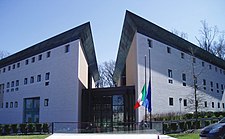
Embassy of Italy, Washington, D.C.jpg

Chapter 12

“Should we go?” she asked. “Where?” “To the Italian Embassy. I was invited to a seminar on Kosher food. Even though I am non-practicing, I am of Jewish and Irish origin and I thought it could be interesting. What do you think?”

Michael stretched. They had been concentrating for hours on Rachel’s work for her biggest client, the Hon. Edmundo Gutierrez.

“Anything to get out of this room.”

 “Tell me, what religion are you?” asked Rachel.

“I was brought up a Catholic, but I am a non-believer.”


Rachel put the documents they had been working on in her safe and then locked the door to her office as they left. Michael followed her, with his sleeves still rolled up and carrying his jacket. They took the elevator to the parking garage and got in Rachel’s Smart car – one of the few to be seen on the streets of Washington. It must have been quite a sight to see the beautiful red head driving around in her mini car. From K Street on to 15th Street and then Massachusetts Avenue towards the Embassy.

“Do you know the history of the Italian Embassy?” asked Rachel, while at a stoplight.

“Not in any detail,” Michael lied, to be polite.

“The Embassy used to be on Fuller Street. A once prestigious area it had gone downhill and until fairly recently was unsafe. Imagine this: the police used to hide in the Embassy’s front garden to watch and catch drug dealers. At some point it was decided to build an imposing new embassy on Whitehaven Street off Massachusetts Avenue, right down the street from where the Clintons have a house.”

As she was turning left onto Whitehaven, Rachel continued her story.

“Here you see this parallelepiped shaped building?  According to the designs of the architect Sartogo who won the international competition for the job, the inspiration is supposedly a Tuscan Renaissance fortress. I don’t know what to say. In any event as you can tell, the building is divided into two parts. In the middle there is a large covered area, called the piazza Italia, used for exhibits and concerts. The embassy has become a tourist attraction.”

Rachel parked and they walked over to the security gate. Before going through the metal detector Michael had to take out his cell phone, wallet, keys and Beretta. The security officer on duty examined the gun carefully and said, “We will hold on to this until you leave.” Michael nodded in agreement. Once under the embassy’s large dome, Michael admired the antique paintings placed on vividly colored walls. Then Michael and Rachel headed towards the 200-seat auditorium.

The seminar started, after a brief introductory greeting by the Ambassador. The speakers were a rabbi, a marketing expert and the young CEO of a company that imported Kosher products. The rabbi spoke at length on how Kosher food rules were dictated by the Bible and gave detailed examples ranging from meat, to coffee to candies. He stressed the fact that Kosher meat was in increasing demand throughout the U.S.

“It’s difficult if not impossible to invite an orthodox Jewish person for dinner unless you can guarantee a completely Kosher meal,” Rachel whispered in Michael’s ear. “As for me, no problems, you can invite me whenever and wherever you want,” she added.

At the end of the lengthy presentations, Michael and Rachel followed the other guests to piazza Italia to taste samples from a buffet of Kosher foods. “The most interesting thing,” Michael commented, “is that Jews and Muslims agree on this one point. Millions of Muslims in the U.S.  buy Kosher food when they don’t have access to “halal” products as the process is basically identical.”

“Whatever. How about coming to my house for some pasta?” Rachel said with a smile.


Rachel O’Hara’s apartment was in a luxury condo building on Wisconsin Avenue a few minutes by car from the Embassy. They parked in the building’s private garage and took the elevator to the 10th floor. Rachel lived in a studio apartment with a kitchen, large bathroom and sleeping alcove.

“How about giving me a hand? Since you’re Italian I’m sure you know how to make good pasta.”

Michael got to work. In due time he had cooked pasta for two, garnished with butter and freshly grated Parmigiano cheese, and set the plates on the small dining table. Rachel meanwhile had showered and come out of the bathroom wrapped in a multi-colored pareo. The two sat down to their meal. They ate and drank a bottle of Morellino di Scansano, and laughed about the prowess of Italian men who come to America and capture the hearts of women thanks in no small part to their skill with pots and pans. It’s a talent that is much appreciated by those American women who hate to cook.

Rachel stood up and took an old LP from a shelf.

“Michael, I have gone back to vinyl. I’m sure you remember this Sarah Vaughan album.”
 
She gestured towards Michael in invitation. To the accompaniment of “The Nearness of You” Michael nuzzled Rachel’s neck. He breathed in her intense personal scent with its hint of Arpege perfume. He heard her soft moan and felt her press against his erection. Rachel was living up to the reputation held by redheads. She moved against time in time with the music.

Then she dropped her pareo and uncovered her beautiful, curvaceous body. Her nipples were aroused, her hips round, her legs long and shapely. She knelt down, unzipped his pants and pressed her face to his erect penis.

“It is so lovely,” she whispered again and again. She delicately took hold of him, as if handling a precious reliquary, and rubbed his penis over her face and chest. Then she began to flick her tongue as if to prolong and increase his tormented excitement. Michael exploded all over her face, while she fingered herself in ecstasy.
_________________________________________________________________________________

"Take care not to make grandma angry. I will come see you this weekend. But you have to promise me that you are getting all A grades.”

 Rachel was whispering, but the sound of her voice woke Michael.

“I was talking to my daughter Sarah. It’s the old story of two silly young students who get married and split bitterly shortly thereafter. Get up and shower. We’ve got a lot of work ahead of us.”
__________________________________________________________________________________

Copyright © 2012 by Oscar Bartoli
New Academia Publishing/SCARITH Books, 2013
Translated from W.D.C. Sotto traccia, © 2012, Betti Editrice Translator, Maria Enrico
All rights reserved.
Printed in the United States of America
Library of Congress Control Number: 2013930329 ISBN 978-0-9860216-8-8 paperback (alk. paper)
All characters appearing in this work are fictitious. Any resemblance to real persons, living or dead, is purely coincidental.
An imprint of New Academia Publishing P.O. Box 27420, Washington, DC 20038-7420
info@newacademia.com www.newacademia.com
sabato 11 luglio 2015

Chapters 8 and 9 of the thriller "D.C Undercover" Oscar Bartoli (Scarith Books/New Academia Publishing)

 
Linotype machine

Chapter 8

1150 15th Street NW, just a few blocks from the White House, headquarters of the Washington Post, with a Linotype exhibited in the lobby. The Washington Post, founded in 1877, is one of the oldest newspapers in the U.S., with over 700 journalists, it has won 47 Pulitzer prizes. The paper has had its share of missteps: the main one when in 1981 Janet Cook, one of its reporters, won a Pulitzer for a series of articles on a heroin addict child under the title “Jimmy’s World.” It turned out she had invented the whole thing. She was fired and the award was returned. The Washington Post is also the legendary newspaper of Bob Woodward and Carl Bernstein, the two reporters who in 1972 broke open the Watergate scandal that led to President Nixon’s resignation.

It was 8:30 p.m. The next day’s paper was set – barring any important last minute breaking news. Norman O’Brien and Cynthia Bradley, two young editors, were pitching a story to the Editor in Chief. “Look Boss,” said Norman. “We have triple checked this. You know we’ve been working on this for months. We’ve been to Boston to talk with Pallettieri and taped everything. Plus you know what happened to the Madam – even though it’s not clear if it was done by some crazy person or if it was done for hire.” The Editor in Chief was, as always, impeccable with his double-breasted suit ‒ so unlike the traditional image of the shabbily dressed and sweaty journalist – and his carefully coiffed hair that was religiously tended to by Melo, the famous Watergate barber. He listened impassively. Norman all excited pressed on.

“Some of Pallettieri’s clients are real high-level royal Saudi princes, and Al Qaeda has established new bases and training camps in Yemen and Somalia to launch attacks in Saudi Arabia to threaten their power.  Fundamentalist Arabs have been accusing the Saudis for decades of being in cahoots with the infidel Americans their allies. I don’t think I have to remind you what a blow it would be to the image of Saudi Arabia if it becomes common knowledge that some members, when on official state visits to the U.S., spend their time frolicking with high-price escorts and drinking and taking drugs.”

Still no reaction from the Editor in Chief. The only sign of life was the steady breathing typical of a person who spends a lot of time at the gym and goes jogging at dawn before showing up at the office at 10 AM for editors meetings.

Norman glanced at Cynthia Bradley who was chewing her nails. She looked back at him with a sigh of resignation. Norman had no choice but to keep going, even though he felt he was not getting through to his boss. “Publishing these stories would give a boost to the ecologists who support using alternative energy sources instead of the mass quantities fossil fuels that we have to import – especially from Saudi Arabia. “

The Editor in Chief came to life. He cleared his throat and said, “I see that you’ve done a lot of work and I’ve read what you gave me very carefully. Let me talk to the legal department to see if we’re taking any risks and I’ll let you know. Good job.” He ended the conversation with a lukewarm smile and a weak handshake.

Norman and Cynthia left his office and tried to ignore the stares of their colleagues pretending to work in their cubicles. The Editor in Chief dialed an internal number. “Sam, you’ve got to post those two on the city desk,” he said with a first sign of emotion. “And please, I don’t need any grief from you. Do as I ask. I have my reasons.” And Sam, the editor in charge, wrote down that he had to call in Norman and Cynthia and tell them that the boss had decided to expand their professional experience and put them on the city desk because it needed a breath of fresh air. He would add that they were just the right people for the task and for that reason they were also going to get a salary bump.

One hundred yards from the Washington Post is the Post Pub – a reporter hangout. Its cheeseburgers and fries washed down with copious amounts of beer are legendary. Norman was seated at the bar, holding his head in his hands and staring at his reflection in the bar mirror. Mary, the middle aged and motherly bartender, while pouring his third vodka Stolichnaya asked him, “What’s the matter Norman? What happened?”

Norman smiled, “The usual when you have a job like mine, meaning the worst on the planet.” He felt a hand rub his neck and caress his head.

“Come on, Norman,“ said Cynthia, who had just arrived. “Let’s go celebrate getting shot down. You’re drunk and can’t drive, so I will. The last thing you need is a DWI.” As Cynthia paid the tab, Mary commented, “Good for you. I’ve never seen him so depressed.” Norman, who could barely walk, and Cynthia left the bar. They headed to the parking garage and got into Cynthia’s Ford Focus. Cynthia started driving towards Georgetown.

The forecast was for a strong storm and as they were driving it began to pour so heavily that the windshield wipers couldn’t keep up with the rain. Traffic stalled to a crawl. “The perfect ending for a day like this!” said Cynthia. Norman didn’t say a word. He had dozed off. They finally made it to 31st Street where Cynthia found a spot almost in front of her house. As they approached a small courtyard with five small townhouses the rain drenched them.

“Pour yourself a whiskey – one more won’t hurt. I’m going to the bathroom. Here, take this towel and dry off – you are soaking wet.” Norman went to the liquor bar and poured a stiff shot of 12year old single malt whiskey. No ice because he didn’t want to spoil the flavor. He heard the water running in the shower and realized how the evening was going to end. It wasn’t the first time. Cynthia was a good old girl: a hard worker on the job and, when she felt like having sex with no commitments, great in bed. She wasn’t a novice. It was obvious that for her having sex meant not only satisfying her own desires, but also those of her partner.

A few minutes later Cynthia came out of the bathroom. All she had on was a red robe that matched the color of her hair. She took off the robe, while Norman started undressing. Cynthia knelt and pulled down his pants. They lay down on the floor and Cynthia mounted Norman with great excitement ‒ the booze had not affected his performance. She rode him slowly, moving with deliberation, to maximize the deep penetration.

Then she felt a cold pressure being applied to back of her neck. One second later a bullet from a Beretta 9 equipped with a silencer shattered her head. The gun was then pointed at Norman’s face and a shot was fired into his left eye.

Habib Fareh used the towel to wipe off the gun, which he then slid back into his shoulder holster. He left the house and walked to his nearby car. Before starting the engine he made a call from his cell phone. As soon as the call was picked up, he said, “Done.”  Then he started the car and maintaining the legal speed limit of 25 miles per hour he headed towards Maryland. He obeyed every stop sign to avoid being pulled over by any of the numerous hidden, ticket-hungry traffic cops the nation’s capital used to balance the books. 
____________________________________________________________________________


Chapter 9

Several years ago American airline companies had eliminated direct Washington Dc–Acapulco flights. Now you had to make a stop in Miami, Houston or Dallas. Michael had been told that most tourists flocked to Mexico’s Atlantic coast. And so Acapulco, which for many years had been Hollywood’s playground beginning with John Weissmuller of Tarzan fame, John Wayne and Sylvester Stallone, had fallen into decline. People also said that the city and its suburbs, with its one million inhabitants, had become unlivable due to the increasing crime rate and daily homicides.

“No need to worry, señor,” said the taxi driver to Michael Bardi on their way from General Juan N. Alvarez International Airport to the Ayam Resort. “They only kill each other.” He was commenting on the local news about another finding of decapitated corpses. The “they” were the increasingly powerful and armed drug traffickers fighting over control of the extremely lucrative American market.

They arrived at the resort’s main entrance. Michael paid for the ride, got his luggage and went to the front desk. As soon as the receptionist heard his name, she picked up the phone and announced that Mr. Bardi had arrived. A minute or two later a young man in an elegant blue suit – despite the intense heat ‒ pulled up in an electric cart. “El Niño, señor, and La Niña are killing us,” had said the driver of the taxi, a cab whose air conditioning must have long ago stopped working.

“Mr. Bardi, welcome. I’ll will take you to your cottage.” A short ride, during which bunches of lively children and seniors in wheelchairs were narrowly avoided, ensued. The young man opened the door to Michael’s unit. It was obviously one reserved for special guests (the equivalent of a super suite in Las Vegas) and Michael found himself surrounded by luxury and good taste. In a nod to the requirements of wealthy, romantically inclined American tourists there was a Jacuzzi in the master bedroom, ringed with Champagne flutes and scented candles.

“I will return in a few hours. At 9 o’clock if that is Ok with you. This way you will have enough time to rest and go swimming in one of our pools,” said the young man with a lingering, velvety look.

Michael unpacked a linen suit bought in Rome; a custom made shirt from Florence, a few ties from Marinella’s in Naples, and his Gucci loafer, to be worn – of course ‒ without socks. He cranked up the air conditioning, took a shower, and lay down on the bed.

As he rested, he went over the details of meeting a few days earlier in Olgiata with the former Freemason. He still had not received a contract – but then would he ever? After all, the meeting supposedly had never happened. There was no doubt, however, about the veiled threat in what Cardoni had said. Michael had been working as a high level consultant for several years and word must have gotten around. It pleased him, up to a point. In his profession, the golden rule was to stay under the radar. The invitation to the Ayam Resort was a matter of business public relations. Michael had received a series of emails ‒ the first one just a few minutes after the Olgiata meeting. Upon his return from Italy he had managed to free up a little time for Mexico.

Edmundo Gutierrez was the owner of the Resort and of much more. A leading local Guerrero politician of the Institutional revolutionary Party (PRI) that for most of the past 100 years has governed the country, he had been the region’s governor for several years. As such he had been forced to commute between Acapulco and Chilpancingo, the small capital city of the tormented region. When the PRI had lost power in 1997 to the leftist Party of the Democratic Revolution, Gutierrez had decided that politics were a waste of his time and devote himself to his business affairs. Gossipmongers said his business was involved with large-scale drug trafficking ‒ a common accusation in Mexico where politics, corruption and organized crime are a pervasive part of the culture. All of these thoughts went through Michael’s mind as he tried and finally succeeded to fall asleep. He dreamt of driving along the verdant roads of Virginia and then of a pool in the countryside and a blond mermaid who smiled at him. All along an insistent noise was in the background. The phone was ringing. Michael, still dazed, answered.


“Mr. Bardi, it’s 9 o’clock and your appointment is in 20 minutes in the main hall,” said the young man in a slightly excited tone of voice.

“Alright. I had fallen asleep. I’ll be ready in 15 minutes.”

“I will be waiting for you with the cart in front of your cottage.”

Another long cold shower, a quick shave, then on with the linen suit, a shirt – no tie due to the heat – and loafers. Michael opened the door. The young man in the blue suit was waiting for Michael and gave him an intense smile. The cart began its quiet ride along narrow passageways towards the resort’s main building. Everything was Maya inspired: the fountains, the pyramids, the Mayan calendar, and the lively colors.

The cart stopped in front of a short staircase the led to one of the resort’s restaurants. There was a bar and three guitar-playing musicians who were singing one of Michael’s favorite Mexican songs, “Sabor a mi.” The musicians were performing for an elderly, but still vigorous man dressed all in black. He listened, smiling, while sipping a whiskey on the rocks. Behind him were three men also all dressed in black. Two of them were built like American football players. The third one was skinny and sported a Mephistophelean goatee that gave him a ghostly air. He was obviously a local.

When he saw Michael, Edmundo Gutierrez, perhaps afflicted with gout, struggled to stand. His smile reflected the splendor of his 32 dental implants. His dark complexion revealed traces of a long ago encounter between one of his ancestors and a local indigenous girl.


 “I am having some fabulous whiskey. Want to join me?” asked Gutierrez. Michael smiled back and nodded yes. The three bodyguards moved back. The cart driver had disappeared. Gutierrez called over the barman who rushed over a glass, a bottle and ice bucket. Gutierrez shook Michael’s hand, but not in the Freemason way he had expected. Obviously Gutierrez was not a Brother. Better that way.

“Cardoni told you about our club and our concerns. What he didn’t tell you is that we have invested a lot of money in one of Washington’s biggest K Street lobbying firms. We aren’t happy with the results. You know how they operate. They use very highly paid consultants, meaning high-level politicians who lost re-election. These guys have, however, built up close contact with high-ranking people in the President’s Administration, former colleagues on both sides of the aisle. After all, money talks, regardless of political affiliation.”

Edmundo Gutierrez paused so the barman could give him a refill. “Who knows how many he’s had already,” thought Michael in awe of his host’s capacity for liquor.

“We have been calling on you for a while. We have studied your background and professional activities. We do not like to strongarm anyone. How should I put it? We prefer to agree on a trial run for which you will be very well paid. Your first task, assuming you accept, is to check out what is being done on our behalf on K Street. We suspect that some of the new managers at the lobbying firm are playing fast and loose with us. There really is no other explanation for the confidential information leaked to supporters of alternative energy. In this envelope I have put a check I think will cover expenses for your preliminary report. Take it. Think it over tonight. We’ll talk again tomorrow.”

Gutierrez raised a hand. A goddess seated at a nearby table scampered over on very high heels and kissed him lightly on the check. “It’s time to get something to eat. This is my niece.”

The green eyes under a halo of black hair flashed at Michael and struck him to the core. “This is Michael and this is Olivia,” said Gutierrez as they all headed to their reserved table in the restaurant.
__________________________________________________________

Copyright © 2012 by Oscar Bartoli
New Academia Publishing/SCARITH Books, 2013
Translated from W.D.C. Sotto traccia, © 2012, Betti Editrice Translator, Maria Enrico
All rights reserved.
Printed in the United States of America
Library of Congress Control Number: 2013930329 ISBN 978-0-9860216-8-8 paperback (alk. paper)
All characters appearing in this work are fictitious. Any resemblance to real persons, living or dead, is purely coincidental.
An imprint of New Academia Publishing P.O. Box 27420, Washington, DC 20038-7420
info@newacademia.com www.newacademia.com

sabato 4 luglio 2015

Chapter 7 of the thriller "D.C Undercover" Oscar Bartoli (Scarith Books/New Academia Publishing)


Chapter 7

An elderly gentleman was waiting at the door. He had long gray
hair and a long gray beard. Despite the heat, he was wearing a dark
suit, black tie and a long sleeved white shirt. His cufflinks were
gold and embossed with the emblem of the square and compass.
“Welcome, Brother Michael. Can I call you that since you too
belong to our great Institution?”

Bardi smiled in appropriate response and sat where directed.
From the window a cool breeze fluttered the curtains.
“Thank you, Grand Master Cardoni,” he replied.

The elderly gentleman continued, “Finding you was not easy,
but‒as you can see‒we managed. Please excuse the following personal
question. Are you still working for the Washington Smith &
Smith law firm?

“Not any more. We came to a mutual agreement.”

“I imagine that it also included some form of buy out.”

“I know how to take care of myself. Plus, there were some disagreements
on methodology.”

Cardoni stifled a laugh. “Are you hinting at the elimination or
termination of certain dangerous witness statements?”

Michael pretended to have not heard.

“Your silence is wise,” said Cardoni. “To avoid wasting time,
I want to posit a scenario. Years ago I established an organization
called ‘The Rock,’ as you well know. What I want to do is give you
some insight into my motives.
Young Brother Michael, you belong to a Lodge that answers to
the Grand Lodge of Washington DC and I give all due respect to
Washington’s bilingual Lodges. When I examine American Masonic
membership I must admit that I am very pleased at the numbers
of simple folk. It means the Craft is having a real effect on society.
But then I ask myself: can an Institution such as Freemasonry thrive
with a membership of working class people? If we are called upon
to take up our leadership role in society, and to lower the draw
bridges and function as a point of reference for the disoriented profane
people who surround us – well then: if this is true, and it is,
we must have influence over those who are at the very top of civil
society. And this does not apply only to you Americans. It applies
to everyone, starting with Masonic obedience in Italy.”

Michael felt uneasy. The elderly Freemason was going off on a
difficult to understand tangent. After all, he had been widely criticized
in the past for actions many believed to have been undertaken
for personal power gain and that were contrary to the universal
Masonic leading precept of tolerance.

“That is why I withdrew from all Grand Lodges and decided to
devote myself to The Rock. By the way, it welcomes women members.
It is what happened with the Rotary International twenty
years ago; membership is not gender based but is determined by
the applicant’s professional and personal achievements. Our meetings
are held at the highest levels with the participation of very
powerful people – the people who decide the world’s future.”

Michael was struck by his host’s increasing animation.

Cardoni by now was in full swing. “I am sure you want to ask
me what is discussed in our meetings. The topics are the usual ones:
power relationships among nations, multinational operations, and
above all, energy. We discuss what is being done on a global level
to counter increasing energy demands due to the needs of so-called
developing nations that, in fact, are fully developed.”

“You forgot to mention the issue of water…” Michael interjected.
“No offense intended, but these are matters that are being
discussed by scientists, politicians, economists and sociologists
worldwide….”

Cardoni smiled in a slightly patronizing manner and replied,
“Dear young American Brother, what you say is true. Everyone today
is dealing with these issues. The main difference between us
and other famous clubs such as Bilderberg Group or the Aspen Institute
is that we talk and we analyze, but above all we decide and
we act.”

Cardoni’s “we decide and we act” was delivered with what
seemed a hiss as he stared at Michael Bardi. The elderly former
Grand Master appeared to be reciting the opening lines of a script.
What was going to follow would be all the details and the reasons
why he had reached out to Michael Bardi.

“We decide and we act,” he repeated. “What do you know
about the world’s energy problems?”

“What you read in the papers and in sector magazines: that we
have to look for alternative energy sources.”

“But there are no alternative sources, only complementary ones.
It will take decades to reduce reliance on fossil fuels.”

“And they are running out…” added Bardi.

“It was apparent as far back as the 1960s to the members of
the Club of Rome. The discovery of new reserves and technologies
that make it possible to drill at great depths, must, at least for the
moment, prolong the use of fossil fuels. Listen, I do not want to be
excessively pedantic, so it would be best if you listened to what
Michael T. Klare has written on the subject in The Nation.”

Cardoni stood up and started summarizing from a document
he took from a side table:

“In the not too distant future we will be faced with a do or die
contest over energy supplies. The outcome will determine every
facet of our lives and has the potential to generate tremendous profits
and losses. What is your reaction to this, Michael?”

Michael shrugged and replied, “I too have read Klare, and agree
that over-dependence on non-renewable fossil fuels and global
warming are a recipe for disaster.”

“And so,” Cardoni continued, “according to you the winners
will be the countries and corporations that invest in alternative
sources and technologies.”

The conversation was interrupted by the entrance of a woman
in her sixties bearing a tray with tea for two. She put the tray on the
coffee table and left the room without saying a word.

“Can I serve?” asked Michael. He had fresh memories of being
slipped a narcotic while being offered something to drink.

“But of course,” his host replied with a sly smile. “In any event,
no need to worry. I will take the first sip.”

Michael picked up where they had left off. “If what I have read
is correct, fossil fuels represent 80 percent of our current energy
sources. Renewable energy is current at little more than 1 percent
and even in the best of cases won’t increase to more than 5 percent
for the foreseeable future. I think the supply of alternative sources
can be magnified. It all depends on the amount of effort is placed
on developing new technologies, restraining the influence of the
oil companies and the degree of political will to do so. Despite
the long-standing global economic crisis, true visionaries such as
America’s President and certain conservatives will take this path.”

Cardoni cut to the chase and asked, “So, Brother Michael, whose
side are you on?

“Which would you suggest?”

“On the side of the realists. Developing alternative energy
sources in sufficient quantity to satisfy demand is a dream for now.
America’s President is certainly doing his part, but it might be better
for him if he devoted more attention to improving his image.”

Cardoni then zeroed in on the true reason for the encounter. “Let
me put this bluntly: do you want to work for us or not? You will
be well compensated, believe me. Please understand that our cause
is not aimed at influencing history. We are fully cognizant of the
fact that any action taken to disturb the current, however unstable,
equilibrium in energy source supplies may quickly lead to terrible
consequences for humanity. Weapons of mass destruction have
already made their way into the hands of Iran, Israel, Venezuela,
Pakistan and India. Armageddon may be approaching.”

Michael felt caught. He offered the appropriate thank you and
promised he would give serious thought to the offer, which greatly
honored him. He added that at the moment he was working as a
consultant for a number of international clients, but looked forward
to receiving a written and interesting proposal. And then he stood
up.

Cardoni smiled enigmatically, accompanied him to the door
and made his farewell, “Young Brother Bardi, this meeting never
happened. Remember that the Rock decides and acts on every continent.
Please accept a suggestion from someone who is older: control
your impulsivity and let reason take over.”

martedì 30 giugno 2015

Chapters 5 and 6 of the thriller "D.C. Undercover"

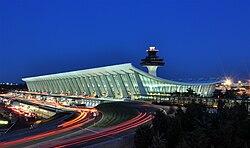
Washington Dulles International Airport at Dusk.jpg

Chapter 5

Michael Bardi collected his shoes, jacket and belt from the tray on
the metal detector’s conveyor belt. He waited for the second tray
with his computer, wallet and cell phone. He had already undergone
full body scanning. With all the terrorists wanting to blow up
airplanes and willing to shove explosives into body cavities scanning
was the only way to try and stop them.
He had to wait for the woman ahead of him to pass through
with an enormous cat. She was asked to remove the cat from his
traveling cage. The cat did not want to stay put in her arms, so
by the time the two of them had gone through scanning the woman
was dripping blood from cat scratches. “That’s what you get
for wanting a pet to love and make you feel less lonely,” Michael
thought.
He started walking towards the train for the terminals. Dulles
Airport had finally completed its multi-year project to get rid of
the variable height bus shuttles that used to transport passengers
to their airlines. The train stopped and Bardi and dozens of others
dragging carry-on luggage got on. At the gate for United flight 966
for Rome, he got on line to join the other red carpet first and business
class passengers.
Once on board he located his aisle seat, Michael devoted all his
attention to reading some documents he took from a compartment
in his computer’s carrying case. His Bose headphones blocked 90
percent of the engine take off noise. He selected the classical music
channel from the ones provided by the airline. In little more than
eight hours he would be landing in Rome at Leonardo da Vinci
airport.
The Boeing 777 reached cruising height and headed North East
to begin its transatlantic flight. While checking to see if it would
bother the person behind him, Michael Bardi pushed back his seat’s
shoulder rest. In so doing, he exchanged appreciative glances with
an attractive brunette with very long legs and a very mini skirt.
Michael smiled and repressed a sigh. He no longer felt like reading.
He started reminiscing salient events from his life. His father
had died in a car accident while driving through the Stelvio Pass.
He might have been speeding. Dad liked to go fast and had some
training in high speed driving. Michael had been told of his father’s
death while he was in his last year of high school and about to graduate
from a boarding school in Saint Morritz. His mother, in tears,
had called him with the news. Michael, however, had always felt a
twinge of doubt regarding the depth of her despair.
His parents’ marriage had been in trouble for some time. One
reason was his father’s work that involved frequent travel around
the world installing equipment in developing nations. Another reason
was the fact that his mother, an American from Los Angeles
who had moved to Italy, was a beautiful woman desperate to keep
up the youthful looks that provoked waves of desire in the male
members of the Milan tennis clubs where she spent most of her
time. Less than one year after his father’s death, she had remarried
an old flame. Her new husband was the heir of a large fortune that
was being dissipated at a fast rate.
Mom… no, that was not the right word. Mother, yes, as in biological
mother. He had spent nine months in her belly. But his
childhood had been a succession of nannies who reared him, wiped
his tantrum tears, and tried to fill the void left by a mother consumed
with going to parties, art shows, concerts, ski trips, tennis
competitions and so forth.
After graduating from high school with straight A grades, it was off
to college at the London School of Economics, a brilliant academic
record, and multiple love stories with this or that girl in constant adoration
of him. Brilliant results also in various sports, especially in
individual sports such as tennis and the martial arts: a judo black belt
and a third Dan in full contact karate.

He was six foot tall and had wavy blond hair. While studying
music in Switzerland he had fallen in love with classical guitar. But
when asked to perform at parties he would insist, with false humility,
“I don’t have the right repertoire.” So his friends would turn to
someone else with lesser skills.
After London he was offered an interesting job in Montreal with
a defense sector company. He had meanwhile, to pass the time,
learned Arabic as another language to add to those he had used
in Switzerland: Italian, English, French, German and a bit of Spanish.
He felt fortunate that his musical talent was of great assistance
in his learning of foreign languages. In addition to his Italian and
Swiss passports, thanks to his job he now also had a Canadian one.

One evening, while at a pub with a girlfriend, a man in a dark
suite had approached him. Asking him to pass along the peanut
bowl, he had slipped him his business card. Then he left, after taking
a sip of his beer.
Michael told his girlfriend that the beer was beginning to have
an effect and he had to go take a leak. Her shameless reply was,
“Make sure you treat it well.” In the men’s room, to the chorus of
men peeing and farting, Michael took care of business and had a
peak at the business card. There was only an address, a date and a
time.

The airplane had encountered heavy turbulence and everyone had
to remain seated and belted in. Food service was suspended and
the flight attendants had taken their seats while trying to mask their
apprehension. Michael wondered why the pilot had chosen not to
deviate. Twenty minutes later the plane stopped bouncing and everything
went back to normal to the passengers’ great relief.
The very effeminate steward assigned to his section came up
to Michael and asked him for his choice from the menu. Michael
wasn’t very hungry and picked the baked grouper. When it was
the turn of the very mini-skirted girl behind him, she picked the
fillet. “How would you like your meat?” asked the steward. “Deep
inside!” she replied in a high-pitched tone to ensure Michael would
hear. “I’d better pretend not to notice or she might decide to come
sit next to me,” thought Michael. When the steward returned to
take back the meal tray he somehow managed to rub against Michael.
“This really is my day,” Michael said to himself.

He said the same thing in Montreal when he went to 305 Rue
de la Commune. After he rang the doorbell, the front door creaked
open. Michael Bardi found himself in the courtyard of an old grain
warehouse turned into condominium.
“Welcome, Mr. Bardi. Please come in,” said the giant young
blond man. His hair was shaved like a GI’s. His powerful shoulders
were encased in a dark suit. He wore the same shiny black
shoes as the soldiers guarding the Tomb of the Unknown Solder at
Arlington National Cemetery. His dazzling white smile showed all
thirty-two teeth.
Michael was in an apartment converted into an office. Behind
an Ikea desk was another 40- or-so-year-old giant. His face had the
deep wrinkles and dark tan of someone who has spent most of his
life in the desert, the tropics or the Caribbean.
“Thank you, Mr. Bardi, for accepting our slightly irregular invitation.
I am Col. Bradford of the US Navy Seals. We have been
following you up for a few years and have taken note of your academic,
professional and athletic prowess.”
And so Michael had become part of the prestigious corps founded
in 1962 and tasked with special operations such as reconnaissance
and non-conventional anti-terrorism and anti-guerilla fighting
by land and by sea. The Seals could do whatever they wanted
wherever they wanted to further the secret interests of the U.S.
After intense training in Coronado, CA and then in Little Creek,
VA, Michael began participating in foreign operations. Had he taken
part in the discovery of Osama Bin Laden’s hideout and his killing?
It was a secret.

At 8:00 a.m. of the next day United flight 966 was preparing to
land, all flaps extended, in Rome. It was raining and the tarmac was
full of puddles when it touched ground. Michael Bardi was traveling
only with his carry on and computer. If he needed anything he
could buy it wherever he was, as nowadays everything was available
worldwide.
The business class passengers prepared to disembark. As he
was exiting the plane, Michael felt a hand caress his ass and hips
and then slip a card with a phone number into the pocket of his
jacket. The brunette was truly relentless.


 Chapter 6

Michael Bardi decided to use his Italian passport to avoid the long
line of Non-European Union citizens going through passport control.
The policewoman gave it a bored glance over and handed it
back with great effort.
Michael didn’t have to collect any luggage as he had everything
with him, so he headed for the elevators. He got off at the second
floor and proceeded down the hallway covered with a worn-out
rubber flooring pockmarked with water puddles. Rome’s airport
was disgusting compared to other major ones – the new New Delhi,
for example, and even Singapore.
Michael finally reached the tunnel leading to the car rental
agencies. He waited in line at Hertz and then went to the 4th floor
parking lot. He had been assigned a new Ford Fiesta, a popular car
in Europe. He got in the car and adjusted the mirrors and the seat to
accommodate his height, which was not that of a typical Italian. He
then drove down the ramp and out of the parking garage.
On his way to the highway for Rome, some officers from Italy’s
Finance Guard pulled him over and demanded to see his driver’s
license and registration. Michael showed his international license
and found the registration in the car’s glove compartment. The
guards wanted to see what was in the car’s trunk. Michael got out
of the car and retrieved and opened his carry on. His Navy Seal
insignia badge was on top. “But these are the Seals! Do you belong
to them?” asked one of the guards with great interest. “I did until
a little while ago,” answered Michael. The guard was visibly impressed
and called over a colleague to look. Then they straightened
up and saluted.
Michael continued on towards Rome. He merged into the Rome
Beltway where the speed limit was 90 kilometers per hour. But no
one followed the rules. Michael decided to drive Italian style according
to the old saying that, “When in Rome, do as the Romans
do.”
He took the Cassia Veientana-Viterbo exit onto the so-called
Cassia Bis. When he saw the sign for Formello-Olgiata, Michael
turned off. After 3 kilometers he came to the Olgiata northern gate.
“Reason for your visit?” asked one of the security men. “Ribot Restaurant”
he replied. The guard handed him a card with directions
and said, “Follow road B. You can’t go wrong.”
The Olgiata district extended for almost 1,500 acres to the North
East of Rome. It was part of the territory that in ancient times belonged
to the Etruscan city of Veio. The Orsini family castle was
nearby. In the 1960s Olgiata had been in the headlines with stories
about the Dormello Olgiata racehorse farm. The most famous steed
was named Ribot and he had won many international prizes. After
he was put out to stud, the stables were converted into luxury
apartments.
Michael followed the directions on the card and slowed down
at every speed bump. Behind him the impatient blond driver of a
Mercedes SUV kept flashing its lights and honking. When she finally
passed him, she gave him the finger as a welcome to Olgiata.
Michael arrived at the Ribot Restaurant, which in a previous life
had been one of the stables of the horseracing farm. But it was 11
a.m. and so the restaurant was still closed.
His 4G-cell phone rang. A nasal, almost falsetto voice instructed
him to go through the green gate next to the restaurant’s bar. Michael
found himself in a large garden with a stone drinking trough
in the center. Apartments belonging to the lucky few able to afford
them when the owners of the Dormello Olgiata property had put
them up for sale surrounded the garden.
A window in a building on his right opened and a hand gestured
to indicate he should take the stairs to a first floor apartment.

domenica 28 giugno 2015

Chapter 3 and Chapter 4 of the thriller "D.C undercover"


 compass
Chapter 3

“Name?”
“Habib Fareh.”
“You’re not on the list. Which Lodge do you belong to?”
“The Grand Lodge of Lebanon. Here’s an affidavit by our Grand
Secretary and a certificate of good standing. You should have my
letter of introduction. They mailed it about 10 days ago.”
The two assistants were perplexed and exchanged worried
glances. Then one grabbed a white badge on which he wrote ‘Habib
Fareh. Grand Lodge of Lebanon’ and gave it to the visitor that was
observing the bust of General Albert Pike, who championed on behalf
of the Scottish Rite in America.
Habib Fareh stuck the nametag on his jacket, retraced his steps
down the hallway and entered the 500-seat auditorium, with its
Broadway-style main stage. He found a seat, squashed in between
two overweight Masons.
The ceremony taking place was in honor of Brotherhood Weekend,
an event of great international relevance. On the right hand side of
the auditorium Habib Fareh noticed the presence of delegates from
foreign Grand Lodges. Brotherhood Weekend had been established
a dozen years earlier as an offshoot of the Bilingual Lodges affiliated
with the Grand Lodge of Washington DC. These Lodges represented
a Freemason-diplomatic bridge between the capital of the
USA and the capitals of other nations. At the Brotherhood Weekend
ceremonies each participant recited the rituals in his own native
language. At times it might have echoed the Tower of Babel, but
for Washington Freemasons it validated the concept of Universal
Brotherhood that unites all members of the ancient institution.
Habib Fareh noticed that the Grand Officers of the Grand Lodge
of Washington DC were on the average 30 years old and that they
were all dressed in formal wear with tailcoats. Every Brother with
an official position, beginning with the Grand Master who wore a
top hat, had an earpiece connected to the control room in charge
of lighting and sound effects. A professional musician, who was a
Freemason, was playing the organ on the auditorium’s left. No one
who was “profane” was admitted to the ceremony. The ceremony
proceeded uneventfully thanks to the many rehearsals. Everyone
obviously knew his part by heart. When the ceremony ended, the
Brothers proceeded to the ballroom for a buffet luncheon.
Habib Fareh meanwhile had asked that the representative of
the Armenia Lodge and of the Iran Lodge in Exile be pointed out
to him. He found a way to sit near them at one of the tables. He
then started up a conversation, and introduced himself as the representative
of the Grand Lodge of Lebanon. There was immediate
interest: “The Grand Lodge of Lebanon? A while ago we had a big
problem when the Grand Lodge of Washington supported the creation
of a Lodge in Lebanon. It ended up creating a big problem
with another Grand Lodge… But you, where are you from and who
exactly do you represent?”
Habib Fareh smiled, “It’s obvious, with all due respect, that you
are not up to date on Freemasonry in Lebanon,” he replied very
calmly. “Excuse me for a moment, I need to go to the restroom.”
As he walked away the two Brothers, who agreed they felt uneasy
about the exchange, decided to discuss the matter with a former
Grand Master who had dealt with the controversy in Lebanon.
“Try and stop him,” he said in great alarm. “We need to figure
out who exactly this guy is.”
But Habib Fareh had disappeared.

Chapter 4

Brother Andrew was deaf mute, but not completely. He was good
at lip reading and could answer with guttural replies. Since childhood
he had been a patient of the Scottish Rite Center’s clinic for
hearing- and speech-impaired students. The Scottish Rite paid all
the expenses for the physicians as well as the patients and the family
members who assisted them. Every day in America, Freemasons
contribute millions of dollars to fund 23 clinics and hospitals nationwide
that take care of children up to the age of 18 with serious
orthopedic, spinal and burn injuries.
Andrew was the janitor at the Scottish Rite Center. His job was
to clean up after all events and ceremonies. He worked hard, but
had a few personal perks. After banquets he would take home
whatever food had not been touched. He also took left over bottles
of wine to drown the sorrows of his involuntary bachelorhood. He
liked women, but they avoided him because of his handicaps. And
sometimes he resold unopened bottles.
That evening Brother Andrew was angry. The Center’s Grand
Commander and General Secretary had told him to search for an
Arab, named Habib Fareh. Apparently he had gained entrance under
false pretenses and taken advantage of the naiveté of the young
guys in charge of registration.
“What kind of jerks do they put in charge? I get the shit jobs,
that pay shit and I’m treated like shit. I get kicked around because
of who I am and have to depend on their handouts.” These were the
thoughts going through Andrew’s mind as he swept the ballroom
floor and picked up empty bottles and litter. “Even among the Freemasons
there are a lot of pigs. Couldn’t someone teach them how to
behave and not just how to recite rituals?”
While the Center’s leadership had taken care not to alarm Brotherhood
Weekend participants, the disappearance of the young Lebanese
made them very uneasy. They kept searching for him, but quietly.
And they looked and looked everywhere for hours, but there
was no sign of the Arab. They looked in the administrative offices,
the meeting rooms, the small temple and its dressing room, the
former barbershop (with its lovely 1900s leather chairs), the main
temple on the second floor, the billiard hall, the ‘hall of lost steps’,
the restrooms, the ladies lounges and in the large kitchen with its
industrial size refrigerators and catering equipment to prepare
meals for hundreds.
They looked in the auditorium, in between the rows of seats,
and above all behind the stage among all the theatrical equipment
where it would have been easy to hide. They shined bright lights
in all the dark corners and recesses of the stage sets and curtains.
Nothing: there was no trace of the Lebanese intruder.
And so they concluded that, once he realized he was attracting
too much attention, the young Arab had sneaked out the same back
entrance door he had used to get in. There was no point asking the
guys hanging out by the door smoking if they had noticed anything.
A few vaguely remembered someone who smiled at them
when entering and having briefly wondered who he might be. The
two assistants at the registration desk and the delegates from the
Armenian and Iranian Lodges had a slightly better recollection and
had participated in the search. All in vain.
Brother Andrew continued sweeping and folding up the napkins
left on the banquet tables and scraping food off the plates into the
garbage bins. He felt tired, very tired. He had started work at 6 a.m.
and now it was midnight. He’d have to finish cleaning up the next
day. For now all he had left to do was to take out the trash and then
get in his ten-year- old Corolla and drive home to Damascus, MD. It
was a 45-minute trip, and there wouldn’t be any traffic at this time
of night. But he was so tired and he had to get up early. He’d be
lucky if he got four hours of sleep.

“Know what?” he thought, “Maybe I’ll just sleep here. I’ve done
it before.”
Andrew put away the broom, and passed through the small
temple on his way towards the barbershop. “One more place to
clean tomorrow. What a bitch.” When he got there he stripped
down to his underwear. Then he turned on one of the sink faucets
and let the water run. He was so thirsty, almost certainly because
he had eaten some of the spicy Peruvian leftovers while cleaning
up. He filled a paper cup with water and drank it with a big sigh of
relief. He drank some more to settle his stomach.
It had been a wise choice to stay over and not drive all the way
home just for a few hours rest. The Director General wouldn’t object.
“I certainly do not ask him to pay me overtime even for while
I’m sleeping in a barber chair.” The headrest was really comfortable.
“Those Freemasons in the 1920s treated themselves well. They
had a free barber. OK, maybe it was only for the ones going on
stage to act out Scottish Rite rituals, but it was still a free haircut.”
Andrew became thankful at the thought of all of the years he
had spent at the Center and the care he had received from the clinic.
After all, it almost felt like home. He pushed the seat back as far as
it could go and settled in contentedly.
The metal loop cut his throat. Air and blood squirted out from
Andrew’s trachea and arteries making a strange sound. It was not
his usual utterance.
When the body stopped withering in agony, the Arab used
a towel to wipe off his instrument of death. He had bought it for
a hefty sum from an antiquarian in Valencia. It dated back to the
1600s and had been used on countless throats.
Habib Fareh, or whatever his real name was, left the barbershop,
and went through the small temple and the kitchen. He then walked
down the hall and up a flight of stairs to the secretary’s office. The
door was locked, but he opened it easily with a skeleton key. Once
in the office, he turned on the computer and started retrieving files
confident he would not be disturbed, at least for a while. The dead
janitor, after deciding to spend what turned out to be his last night,
had not turned on the central alarm system connected to the local
police station.

Fareh called a number on his cell phone. As soon as he heard
the other side was on the line he said, “Done,” and hung up. From
a pocket he took out a silver cigarette case from which he removed
a joint. He proceeded to light it and took a few long drags before
turning back to the computer and the Center’s files. Feeling completely
relaxed, he smiled at his reflection in the computer’s monitor.
Everything had gone as planned, thanks to his professionalism.
When it came to international assassins, he was the best